
They are the Lewis and Clarks, the Neil Armstrongs and Christa McAuliffes of international journalism. Foreign correspondents are more than reporters and photographers. They’re adventurers, leaving the comforts of their homes to explore the rest of the world, telling stories of people, politics, economics and war beyond the borders of the U.S., often in dangerous places. Since 1939, the Overseas Press Club (OPC) of America has committed to giving these journalism journeyers their due.
The OPC is best known for its awards dinner, a sincere and sometimes somber celebration of the commitment it takes to do the job. This year marked the 87th annual event. Julie Pace, executive editor at The Associated Press (AP) delivered the keynote.
Building on a legacy mission
Notably, the OPC was formed around the time reporters were covering Hitler in Germany, the Spanish Civil War and Japanese aggression. A group of those correspondents started a club, and it’s been active ever since.
“They came home and they just wanted a place where they could gather, network, have drinks and have programs — so they could talk to people who were experiencing the same challenges that they were,” said OPC Executive Director Patricia Kranz. “Not that they were always in the most dangerous parts of the world, but they wanted to swap stories and share information, and they really wanted to work abroad … and that’s still our main mission, honoring the work of international journalists.
“We always say we’re like the Pulitzers of international journalism, because in our world the prizes mean a lot to the correspondents who are often working alone somewhere in a conflict zone and doing very challenging work. It means a lot to them to have their work be recognized.”

This year, 22 works were awarded.
Elliott Woods is a freelance correspondent who has won three awards from the OPC. This year, he received the Madeline Dane Ross Award for “Inside the Deadliest Immigration-Related Disaster in U.S. History.”
In 2022, 53 migrants were found dead in the back of a semi-trailer on the outskirts of San Antonio. The trailer’s refrigeration system had failed in 100-degree heat. It wasn’t the first time something like this had happened. Texas Monthly hired Woods to find and speak with the victims’ families. The dead were not asylum seekers or refugees, Woods said, but people trying to get into the United States to work, transported by smugglers.
Woods spent two years reconstructing the details of the lives and deaths of the migrants. He traveled to multiple Latin American countries, recording not just the families’ grief but also the economic circumstances that influenced the migrants’ decisions to attempt a border crossing.

Woods is immensely talented. He tells prominent stories with powerful photographs, and he paints pictures with prose. His reporting begins: “María Victoria Velasco Jiménez buys votive candles by the case. For more than two years, she has kept one lit on a shelf above the microwave and mini fridge in the apartment she shares with her daughter, Arlet, in Lomas de San Isidro, a hilltop colonia on the southeastern edge of Mexico City. The streetlights outside the apartment paint the blocky buildings in a yellow glow. Stormwater courses down the center of the unpaved and rubble-strewn street. Millions of lights blanket the ancient lakebed below, rippling out across the hills that surround the capital.”
Woods ensured the victims’ families were given a voice, that their faces were seen, that their pain was felt, their circumstances known. And, in turn, the OPC made sure the work was honored.
Woods lives in Montana. He speaks fluent Spanish and French, and is conversationally proficient in Portuguese, Italian, German and Arabic. He’s built for international journalism, but finds it increasingly challenging.
“Obviously, the kind of work that I do is very expensive, so ever since I started doing this kind of work back in 2008, 2009, I’d get grants for a lot of my overseas work — sometimes one grant from one nonprofit organization, sometimes multiple grants, the more complex the story is, you know. … I’m working alone pretty much all the time. I also have to figure out all my own logistics, all my own travel, all my own arrangements with whatever kind of drivers and translators and various other people whose support I need in these environments. Getting visas, getting permission from whoever I need permission from to be doing what I’m doing — I have to manage all that stuff on my own. I don’t have any support, so that is a real struggle. It’s a large set of challenges to make any of these projects happen that I’ve been involved in. I mean, it’s also part of the fun.”
“The finances are grim,” he said. “Not only do I have to find my own funding for travel expenses most of the time, but then the pay that I receive from even larger publications is not very good and has gotten worse in terms of real dollars, in the sense of per-word fees declining over the course of my career and also because of inflation.”
Woods doesn’t do the work for validation, but given the challenges, winning awards from the OPC means a lot to him.
“Not every award-granting institution has the same level of credibility and institutional depth as the Overseas Press Club,” he said.
The OPC board consists of key leaders in some of the most prominent media organizations in the U.S., including The New York Times, The Washington Post and Bloomberg.

OPC President Scott Kraft is proud of the organization’s process for recognizing international journalists. Kraft spent a big part of his career as a foreign correspondent for the Los Angeles Times, during which time he became an OPC member. He’s been president for four years. In September, Sandra M. Stevenson — an award-winning journalist, editor and current managing editor for visuals and immersive experiences at Education Week — will assume the role.
“The jurors understand the work’s difficulty,” Kraft said. “People who are judging this work, they can see the work challenges that others might not see.” He said the categories are frequently reviewed and updated to keep the awards relevant. And awards are merit-based, no matter how big or small the publication.
“There was a time when a lot of our awards went to the big organizations that could afford to have big foreign operations, and you know that’s still true, but more and more recently, organizations, outlets and publications that you would not expect to have great foreign reporting have produced great foreign reporting, and I'm really happy that our juries have been able to identify that work.”
The OPC is a small operation, run by Kranz, the executive director, and some part-time help. But it’s increasingly added more offerings than a high-end awards ceremony and program. The OPC:
The organization is in the process of changing its filing status to a nonprofit 501(c)(3) organization, so donations can be tax deductible. This has the potential to expand the revenue for the group to offer more programming and support to international journalists.
“What I would like people to know is that we are one of the coolest organizations you’ve maybe never heard of,” Kraft said. “Because we’re in this kind of slightly narrow space in the journalism world, but we’re all about protecting journalists, training journalists to do this kind of work and celebrating the best work.”
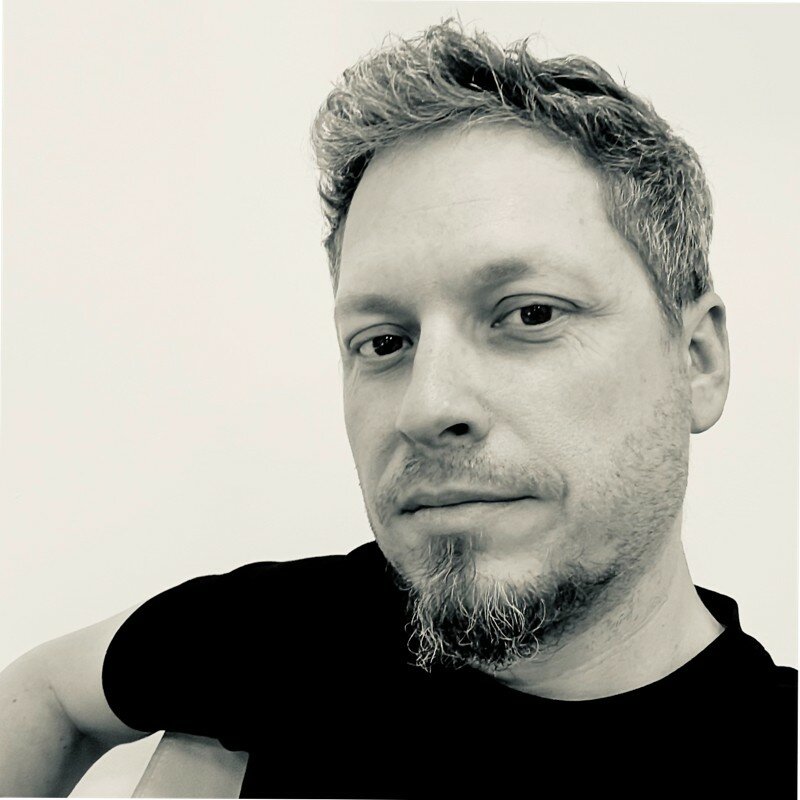 Bob Miller has spent more than 25 years in local newsrooms, including 12 years as an executive editor with Rust Communications. Bob also produces an independent true crime investigative podcast called The Lawless Files.






Comments
No comments on this item Please log in to comment by clicking here