
With many news and media organizations trying to retain or regain the public’s trust in their reporting, one takes a counterintuitive approach. Isaac Saul, founder and executive editor of Tangle News, an independent, nonpartisan and subscriber-supported news platform, contends you shouldn’t trust Tangle until it earns your trust. That approach seems to be working.
Founded in 2019, Tangle News has approximately 500,000 daily readers in more than 60 countries and hundreds of thousands of monthly podcast listeners. Newsletter subscribers account for 85% of revenues.
“I have the classical entrepreneurial story: I looked for a product that didn’t exist, so I tried to build it. I wanted one place where I can get multiple views on a controversial news topic and leave feeling like I had a good understanding of how different people on the left, on the right and in the middle were thinking about important political stories,” Saul said.
After discovering his quest, Saul then asked family and friends to help him name his news concept. Tangle was one of the submissions, and Saul knew immediately that it captured his vision perfectly and was unique.
“Understanding these complicated topics is a tangle. Most of the time, we have these debates because the issues aren’t simple. They’re not black and white, although people think they are. When there are big public disagreements about critical issues, it’s usually because there are complicating factors that make these issues hard,” Saul said.
While still working at his last job at a news organization, he published the first beta newsletter in July 2019. Less than nine months later, he had approximately 3,000 people on his mailing list. He then surveyed them, asking whether they would support Tangle with a paid membership, and 20-30% said they would.
“I was skeptical but encouraged by reader feedback. Many said they were starting to rely on my newsletter for their daily news intake. Others said they stopped reading news on social media because it was a cesspool. I was making progress. One day, I activated the paid subscriptions, and almost 20% of the 3,000-person mailing list became paying members. For me, that was the first strong signal that my newsletter was providing value,” Saul said.
Shifting into overdrive
Initially, Saul wasn’t interested in owning a fully-fledged media operation, but simply enough readers who liked what he wrote and generated a nice income. The vision in his head expanded with his first audience survey for testimonials. It convinced him that Tangle was a public good that changed people’s behavior in a meaningful way. That’s when he quit his job and made a total commitment to Tangle.
After a year of tweaking Tangle and attracting initial readers, Saul was well-positioned to cover the 2020 election cycle and connect with new readers and subscribers during the COVID pandemic. By the 2024 election season, Tangle had 100,000 to 150,000 people on its mailing list, a one-third to 50% increase in just five years. Then, Tangle benefited from the power of mass media exposure when “This American Life” — a weekly public radio program and podcast produced by Chicago Public Radio that reaches more than 3 million weekly listeners, across more than 500 radio stations — featured Tangle in a major profile of its work.
“That doubled our readership in just a month. When the podcast aired and the story aired on all those NPR radio stations, the initial traffic broke our website. It was another proof of concept. There were so many people who wanted this product. It was huge for our business. I’ve been able to build a team and create journalism jobs, which is super exciting,” Saul said.
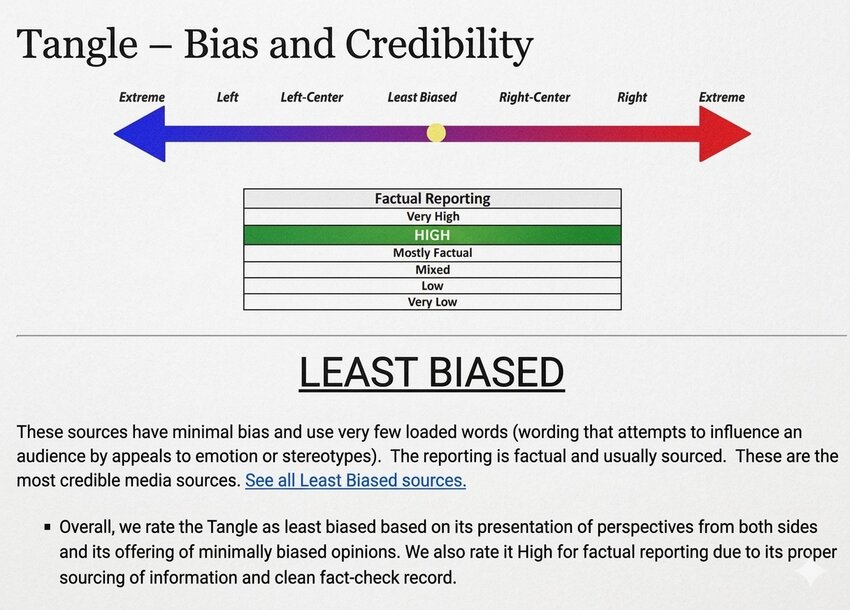
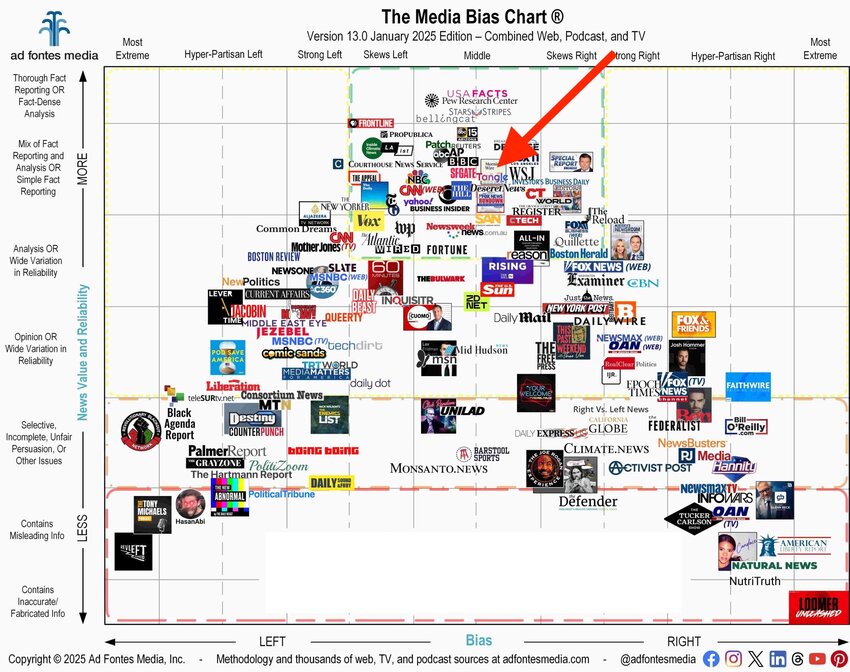
Saul noted it’s common for the same editorial to prompt letters from readers on both the left and right, accusing Tangle of favoring the other side. In that context, the team views the loss of subscriptions as an occupational hazard of genuine balance rather than evidence of a systemic problem. Bias ratings from AllSides, Ad Fontes Media and Media Bias Fact Check support that balance.
Democracy in action
Tangle publishes a free daily newsletter Monday through Thursday and a Friday edition for paid subscribers. A separate Sunday edition offers weekly news summaries in addition to cultural pieces, reader essays, comics and lighter content. Each newsletter presents the biggest political news story of the day with perspectives from the left, right and center. Saul and occasionally staff members add their take on the day’s major story because readers have indicated in surveys that they want to hear their perspective, too. Staff members are also allowed to dispute the story’s perspective in Tangle’s “staff dissent” section.

Tangle’s news product is successful because the daily staff meeting to decide the primary political story in the next day’s newsletter is a democratic process. It doesn’t just include the editors and writers, but also the sales reps and associate video producers; everyone has a say. Ari Weitzman, managing editor, knows this is essential to Tangle’s success, which is why he was excited to start working with Saul in 2020 as a part-time editor and writer.
“It’s critical that our work is based on those democratic principles and our willingness to listen to staff members. When they share good ideas, it would be dumb of us to turn a blind eye and not listen to our sales rep about what he finds interesting. He’s smart. He chose to work for Tangle for a reason. Our staff and our readers have great ideas. We try to be egoless about the origin of great ideas. The best ideas win, not the person at the top of the organizational chart,” Weitzman said.
Tangle knows its audience has good ideas because it asks and listens. When readers express dissatisfaction with a point of view in the newsletters, staff members talk to them individually via email, comment threads and even by phone.
“When we do have these conversations, many people are surprised we responded. We do succeed in convincing them that we are coming from a place of honest, mutual respect and we’re trying to deliver on our promise of providing a diverse set of viewpoints and being a source of news that everyone can trust,” Weitzman said.
Another essential component of Tangle’s success is the value of having ideological diversity on the staff. According to Weitzman, Saul and other decision-makers want people who are unafraid to voice opinions, good at dissecting arguments and not hesitant to disagree.
“We want every person we interview for a position at Tangle to show us they’re good at disagreeing with others and being comfortable with disagreements. They can make a point, and when another staff member disagrees, they can hash it out and move forward,” Weitzman said.
Young, diverse voices are welcome

Audrey Moorehead, associate editor, is exactly what Saul and Weitzman want in an ideologically diverse staff. She started reading Tangle as a freshman at Harvard University, where she was studying English. Although Moorehead is from a very conservative small town, she, like many Tangle readers, wanted to broaden her news diet after the 2020 elections.
“I wanted to find people who were talking honestly about politics instead of partisan mudslinging. After reading Isaac’s work on election fraud theories, I became very trusting of Tangle’s editorial process, Isaac’s perspective, and the presentation of left- and right-leaning arguments. In late 2021, I disagreed with one of Isaac’s pieces and wrote to him explaining why,” Moorehead said.
Saul responded to her and featured some of Moorehead’s comments in a reader feedback edition. This was validation for Moorehead that the Tangle editorial philosophy and the newsletter were genuine. She applied for an internship in 2022, and Saul offered her the position. Moorehead enrolled in college because of her interest in politics and writing but hadn’t considered a career in journalism after graduation.
“My experience with Tangle changed my plans because I didn’t realize how exhilarating it would be in that environment. Exploring the news, doing research for longer projects and being part of a tight-knit team that was committed to Isaac’s vision opened a path for me,” Moorehead said.
As with many newsroom interns, Moorehead was initially quite timid about editing Tangle content, her first work task, but Saul encouraged her to be more aggressive. She appreciated not being treated with kid gloves, but someone who could start contributing immediately. Moorehead’s role has expanded to include assisting with Tangle podcasts by lending her voice to audio segments, researching and writing for video production, managing some social media pages, and moderating the reader comment section.
Moorehead is committed to Tangle for at least a few more years but would like to attend law school to become a lawyer or a legal journalist.
Embracing digital platforms to boost audience loyalty

Like several Tangle team members, Jon Lall, executive producer, was a casual reader of Tangle before being hired in 2023 as the new video/audio editor. During his interview with Saul, he quickly discovered they shared the same passion for creating and sharing political issues with different perspectives.
“I told Isaac I always wanted to be part of a small but mighty group of rebels trying to disrupt the status quo. As a Tangle reader, I found it to be a credible and trustworthy source, processing current political information and helping people develop their opinions. It’s a very special product,” Lall said.
Although the Tangle newsletter was popular, with 50,000 total subscribers when Lall was hired, he wanted to create additional news products for people who are not necessarily newsletter readers. He and Saul improved the podcast to reach people on the go and launched a YouTube channel for those who prefer visual information.
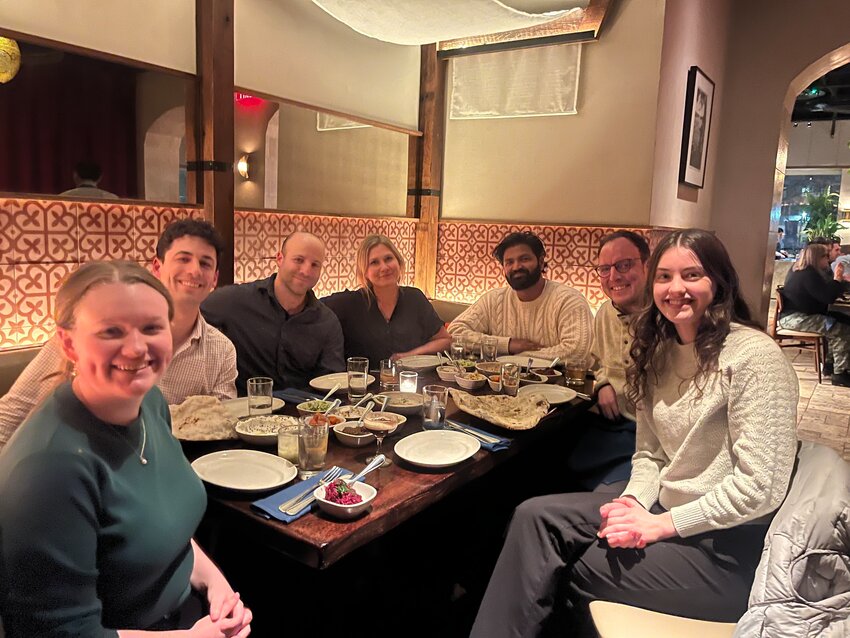
“To put a face and a voice to the written word makes people feel they’re much more connected. When people hear what we’re doing and the difference we offer compared to other sources, they recommend us to their family and friends. It’s quite amazing that people are so engaged and so passionate about spreading the word about Tangle. We haven’t yet reached our peak,” Lall said.
With Lall on board, Tangle has been able to add more guest interviews to its YouTube channel. Among those was the opportunity to shadow U.S. Congressman Jake Auchincloss (D-Massachusetts 4th District) for 48 hours. He not only opened doors for Tangle but also had behind-the-scenes conversations that many politicians avoid. A future interview is planned with Christine Todd Whitman, former governor of New Jersey.
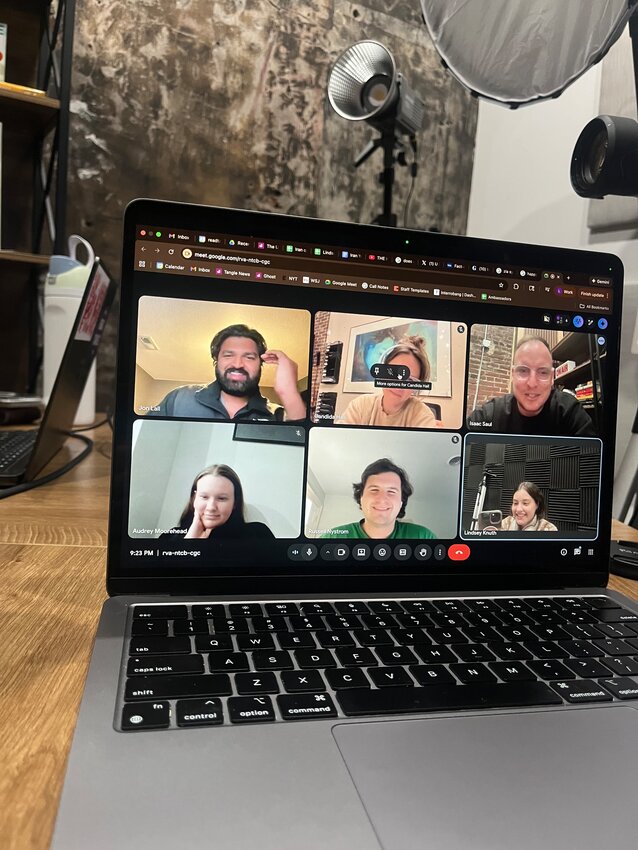
“We recently started live-streaming more on YouTube, and we were surprised at how many people joined but also continued to view the video, although it was approximately an hour and 15 minutes. The average retention time for a YouTube video is a minute or two, but we’re seeing retention of 20 minutes or more for our videos. It tells us there is an audience for our content and they want more of it,” Lall said.
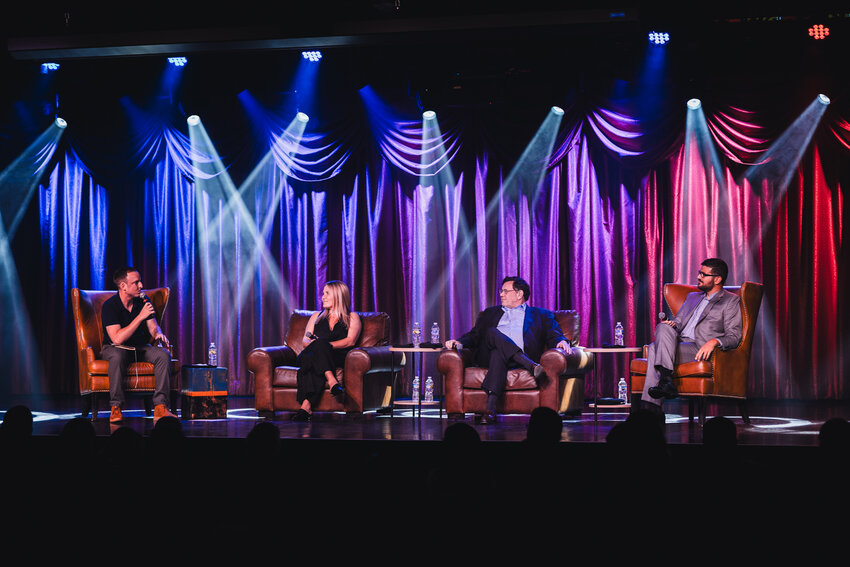
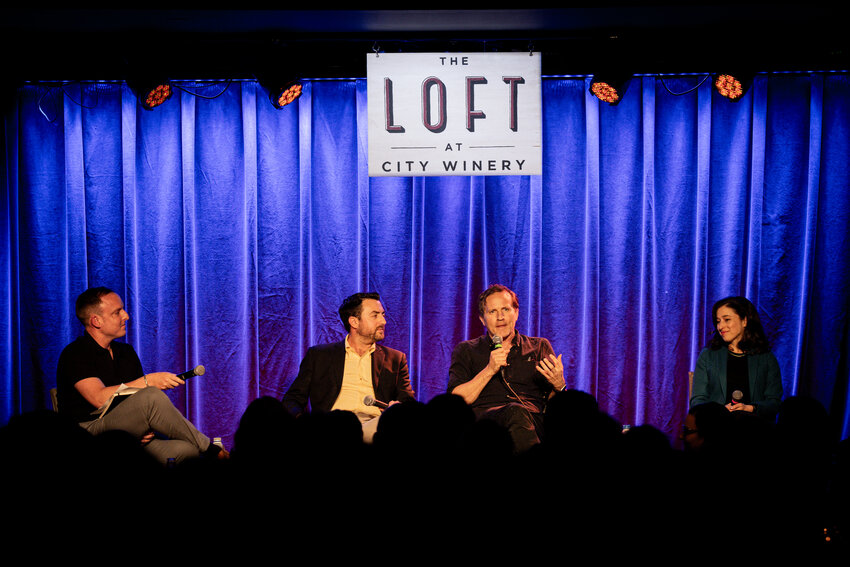
Lall also produces and records the Tangle Live event series and lends his expertise to enhance their quality. An event at the Irvine Barclay Theatre in Irvine, California, was a six-camera shoot. Editor & Publisher readers can visit the Tangle Live page for future events.
“Whatever Happened To…” is a new video series about headlines and stories that faded into the background, revealing what has occurred in the interim. The first of these was investigating the disappearance of the Great Salt Lake. Will Kaback, senior editor, led that project.
“Our podcast, YouTube videos and live events use the same ethos as our newsletter but deliver more in-depth reporting on topics that are not necessarily covered in the newsletter. It’s not just about the age range of the demographics but also reaching different audiences and sustaining the loyalty of our subscribers,” Lall said.
The business of building trust with news readers
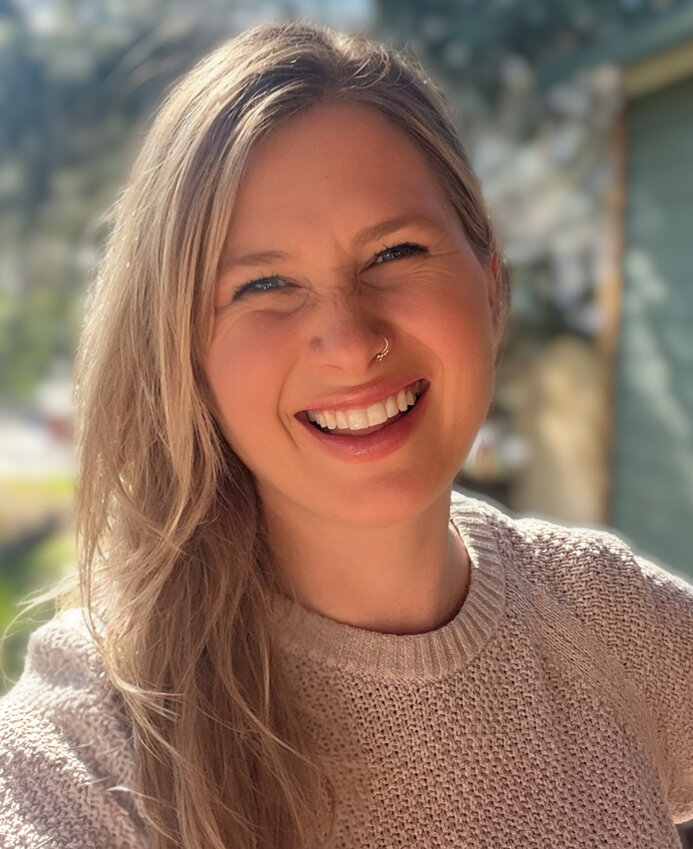
Because Tangle’s early success was a sign that it could become more than a part-time newsletter, Saul’s first hire was Magdalena Bokowa, who is the chief operating officer. She was a working journalist, covering state and local news, but paused her career at the beginning of the COVID pandemic. Although the original Tangle job opening was for a freelancer, she and Saul have created a trusting relationship. Today, she leads Tangle’s growth strategy and helps shape its long-term vision.
“The human angle we provide is what resonates with many people. It sets us apart from other products in the newsletter space. Many newsletter businesses are rooted in advertising models with a free base audience. Our paid subscribers value our journalism, our independence and our no-investor model,” Bokowa said.
Several metrics indicate the successful efforts of Bokowa and Alex Starr, head of business development:
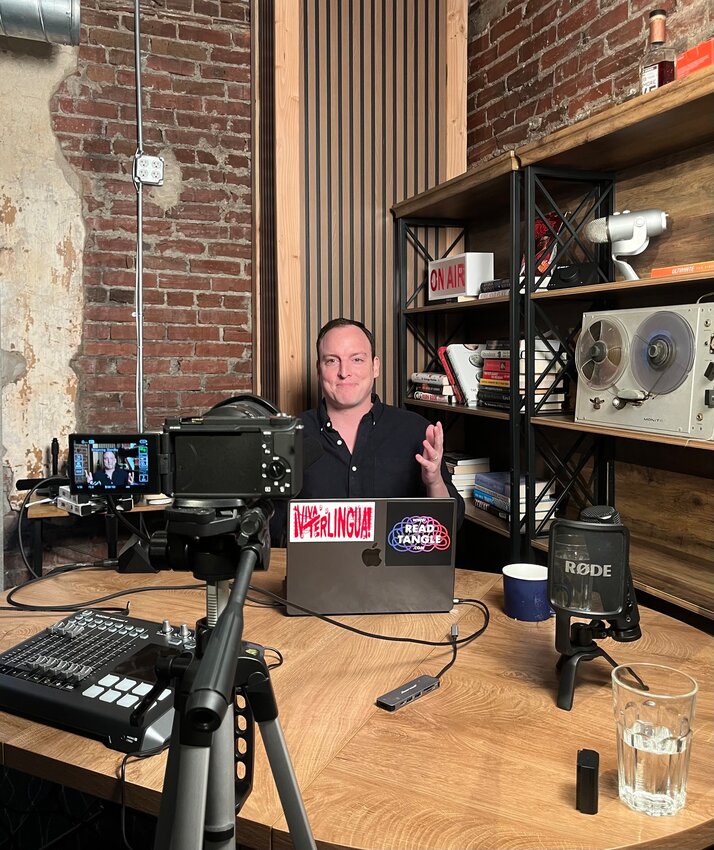
Although newsletter and podcast ads currently account for just 15% of Tangle’s revenue, Bokowa is focused on increasing its share. Tangle certainly delivers the audience demographics that attract advertisers. The largest demographic is 45 years of age and older, with an average annual household income of $160,000 and 82% with a bachelor’s degree or more education.
“Our reader subscription model is the primary revenue driver, but diversification is key. We’re actively building our advertising model without overwhelming readers. The daily newsletter has plenty of content, so we’ve stayed true to our no-pop-ups, no-videos policy. Much of our advertising is natively integrated with text-based copy,” Bokowa said.
Health and wellness advertisers, online software and tech gadgets all do well. To Bokowa’s surprise, advertising for matching Hawaiian shirts for the entire family also performed very well. Merchandising (T-shirts, ball caps and other items) and Tangle Live events build the brand, reach new audiences and create a sense of community.
Based on its significant success through 2025, Bokowa and the Tangle team have lofty goals for 2026. They envision total subscribers (daily and Sunday) increasing to 795,000, paid subscribers increasing to 92,000, and additional revenue of $540,000 to $1.2 million.
“The goal for me is to scale the audience without having to scale the newsroom. I want to build a sustainable media organization that operates at a profit and builds a cushion for rainy days. We’re still ambitious and offering our readers and subscribers what they can’t find in a similar organization,” Saul said.
 Bob Sillick has held many senior positions and served a myriad of clients during his 47 years in marketing and advertising. He has been a freelance/contract content researcher, writer, editor and manager since 2010. He can be reached at bobsillick@gmail.com.






Comments
No comments on this item Please log in to comment by clicking here