Jerry Simpkins
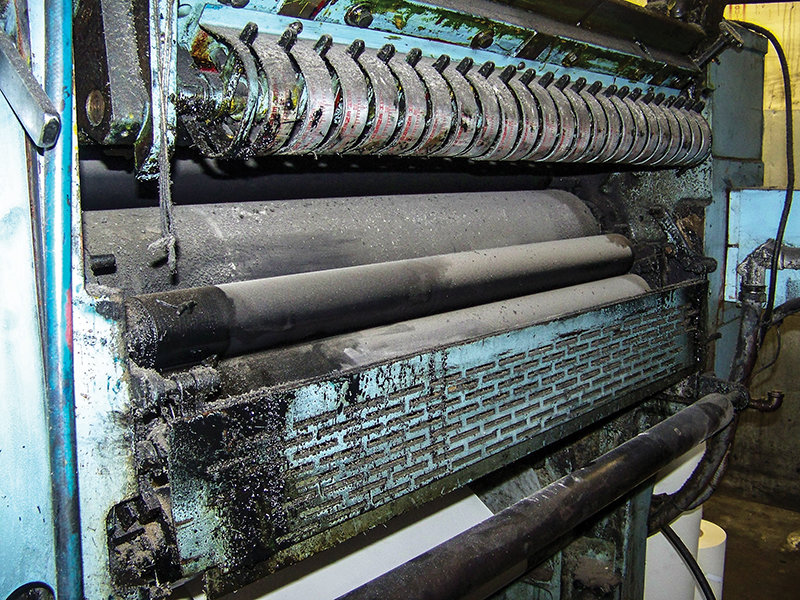
Very few of us purchase a new vehicle and proceed to drive it 100,000 miles without so much as an oil change, tune-up or scheduled maintenance. We pull out the owner’s manual, carefully review maintenance requirements, follow the manufacturer’s recommended schedule, and begrudgingly invest hard earned dollars to protect our investment. Yet many of us find it perfectly acceptable to run expensive equipment at our properties that owners have invested millions of dollars in without following basic maintenance procedures. I’m amazed that the same individuals who nurture and care for their own personal investments often don’t follow basic maintenance procedures with the equipment that provides their weekly paycheck. Let’s start with some basic planning.
Mindset. Your crews must have the proper mindset to accomplish any successful maintenance program. Management can put together the best written program and if they don’t receive “buy-in” from the crew, it isn’t worth the paper it’s printed on. Be careful to not only include employees in establishing your program, but assist them in putting together “their maintenance program.” Don’t just review the manufacturer’s guidelines and hand it to your staff to follow; spend the time and listen to the experts, the individuals who spend day after day on the equipment, who often know the equipment as well or better than the manufacturer. While it’s important to take recommendations of the manufacturer into account, for a top notch program include the ideas of those who use the equipment on a regular basis and might know a thing or two that the manufacturer doesn’t. You’ll design a better program and end up with something the manufacturer can’t give you—employee buy-in. This one detail can make or break any maintenance program and is an essential key to success.
“Depth” of your written plan. To a degree, I believe the more simplistic a plan is the better chances are that the plan will be followed. I’ve put together some detailed and complex maintenance programs, included pages of instructions and watched them sit on a shelf until they’re covered with dust. Sure you can go out on the floor and demand plans are followed, but you’re not going to have the buy-in needed for a successful program. Often we feel that the plan has to cover every single aspect of maintenance, crossing all the T’s and dotting all the I’s, or we haven’t designed an effective enough plan. I believe this is how we’ve designed so many ineffective maintenance programs. A program that is developed with employee input (buy-in), follows basic manufacturer recommendations, and is a program that employees can and will use is the key to success. A complex plan that crews can’t follow or requires unrealistic efforts will end up being “pencil whipped” and return no meaningful benefit. Design a plan that they don’t agree with or one that you’ve developed and are forcing on crews, and I can guarantee you the program will fail.
Finding the time for maintenance. You can have a well designed maintenance program, crews that are ready to give 100 percent, necessary replacement parts, the best tools, and still fail if you don’t provide crews with the time necessary for maintenance. We’ve all worked in some really busy shops. Scheduling time for maintenance is a necessary evil. If you don’t maintain equipment on the front-end, I guarantee it will come back to haunt you on the back-end when you most need reliable equipment to meet deadlines and provide optimum quality. Make the investment in your equipment by scheduling maintenance time the same as you would schedule any print job. Set aside appropriate hours and provide your crews the support they need.
The right tools for the job. In order to be successful you must provide crews with the tools necessary to accomplish the task; both “technical” tools and good old fashioned hand tools. From the technical side, sure you can install a blanket without checking the torque, it will probably print, but it won’t be right. Likewise you can run your press without checking conductivity, it will probably print, but again it won’t be right. We know a few thousands one way or another on a blanket can dramatically affect printing, but how many of us work without Cobra Gauges none the less? If you’re unsure what measuring devices (tools) your crews need to do their jobs, simply ask them; believe me they want tools that make their job easier and give them the ability to put out good work they can be proud of. Measuring devices keep print quality in check and allow us to follow manufacturer specs so we don’t prematurely wear out equipment and can continue to maximize performance, but many shops lack the simple basic hand tools necessary for crews to accomplish a successful maintenance program. I’ve worked in pressrooms with dull drill bits, broken screwdrivers, worn out power tools, etc. I’ve seen rounded off bolts from using vice grips instead of the correct size wrench, simply because the right size wasn’t available. Often management provides the right tools in the beginning but over time they wear out, break and walk off on their own. Get together with your crews and find out what they need. Invest in locking cabinets and make sure supervisors have keys so that employees can have access to tools with some supervisory oversight if necessary. Provide crews with the tools they need to do their job or the results you get will be predictable, predictably poor.
Replacement parts. The reality is things break. When they do, we have several options, which I’ve always boiled down to three choices: 1. Leave it as is and hope for the best (not always the best outcome) 2. Baling wire and glue (not always the best outcome) 3. Fix it right the first time. While options 1 and 2 are less costly in the short term, they can be detrimental to quality, productivity, reliability, and overall performance. They also tend to compound, i.e. small issues lead to larger issues, which lead to more significant issues, which end up becoming major problems. Painful as it may be to replace that $100 part now, I guarantee it will be even more painful when it shears off and takes a $3,000 cylinder with it, causing you to miss the deadline on a critical print job. Take care of your press, your inserter, forklift, clamp truck, compressors, building, the list goes on. You may think you’re saving money now, but you’re putting off the inevitable, and when the time comes, which it will, you will pay for it dearly.
Getting started If you’ve read this far you’re already well into developing a successful maintenance program. The “bones” of a good program are listed above and should provide the basic roadmap to starting an effective program. With the help of several qualified operators I have previously worked with, I have put together numerous maintenance programs in several areas of production. Large operations, small shops, mailrooms, binderies, pressrooms, I.T., and general building operations—the list can be endless. Every program is different and a one size fits all program does not exist. The only program that will be successful is the one that you and your crews design around your specific operation; I can only offer suggestions based on what has worked for me in the past. Here are a few basic guidelines to help you get started putting a formal plan into action for a single press operation. Start by purchasing several binders. Depending on what equipment you’re going to include and the size of your shop, you will probably need a dozen or more binders. You’ll probably want to keep an electronic record (perhaps a spreadsheet) of all maintenance, but you’ll also need a hard copy that operators can refer back to quickly, record events on even with dirty hands, and easily share with others on the floor. While a pencil and paper may have dropped in popularity, both are necessary tools here. Label binders according to equipment, units, etc. These binders will be kept in an area that is accessible to all users and can be reviewed by management as needed. Create a blanket log you might want to implement. Each sheet of paper would be several rows deep and allow press operators to record blanket activity. This is a great way to track longevity of blankets, unit performance, and provide information back to the manufacturer. Similar to the blanket log, a roller log provides critical information on the condition/longevity of your rollers and provides feedback on related issues. It offers useful information regarding performance on a specific press unit or problems with vendor materials. When establishing a maintenance program, breaking down responsibilities between crews provides a clear understanding of expectations and gives crews a sense of “ownership.”
Figure One shows a small sample of outlining repairs that may be immediately needed, followed by the basic maintenance that may be require to ensure reliable operation. This is purely an example and your program should be customized to the needs of your press and the abilities of your crews. The same goes for folders as seen in
Figure Two. And in
Figure Three, also include ongoing maintenance beyond specific units/areas of your press. The example in
Figure Four provides a “generic” example that you can couple with individual sheets and use to track numerous areas of your operation. You should also provide a quick and easy (very basic) monthly program/broken down into weeks for small operations. As I’ve said earlier, maintenance programs are not just for your press. Although this is probably the most expensive equipment and I’ve spent a good deal of this article focused on presses, there are several areas of the operation that deserve attention as well. Not only can a solid plan in these areas offer needed reliability and process improvements, but if not attended to can negatively impact your operation just as quickly as a press breakdown. Jumping to other areas of the operation, some of the equipment that may seem insignificant can have disastrous results if not properly maintained. Much of the equipment we rely on daily, presses, plate benders and inserters to name a few, rely on compressed air to operate. Maintaining an air compressor can be just as important as maintaining your other key equipment. Clamp trucks and forklifts are critical to our operation. Unloading trucks and moving paper and preprints around our building occur daily in all our operations. Although we often take this equipment for granted, poor maintenance can stop an operation in its tracks. While a paper baler may be overlooked in maintenance, it can be a challenge if not properly maintained. One of the most important pieces of equipment in any shop is the inserter. These complex machines often require as much maintenance as your press. From a small inserter to a large in-line operation, maintenance is key to a smooth, uninterrupted operation. To summarize, I can’t think of a better way than to wrap up with an axiom from fellow printer and newspaper publisher Benjamin Franklin, “An ounce of prevention is worth a pound of cure.” Address those little issues now and you won’t have to deal with bigger problems down the line. I welcome anyone to contact me at my email address below for additional information or for more examples of the charts I mentioned. I always eagerly share with anyone in the industry who might benefit.
Jerry Simpkins is the general manager at Hi-Desert Publishing in Yucca Valley, Calif. Contact him on LinkedIn.com or at simpkins@tds.net

 Very few of us purchase a new vehicle and proceed to drive it 100,000 miles without so much as an oil change, tune-up or scheduled maintenance. We pull out the owner’s manual, carefully review maintenance requirements, follow the manufacturer’s recommended schedule, and begrudgingly invest hard earned dollars to protect our investment. Yet many of us find it perfectly acceptable to run expensive equipment at our properties that owners have invested millions of dollars in without following basic maintenance procedures. I’m amazed that the same individuals who nurture and care for their own personal investments often don’t follow basic maintenance procedures with the equipment that provides their weekly paycheck. Let’s start with some basic planning. Mindset. Your crews must have the proper mindset to accomplish any successful maintenance program. Management can put together the best written program and if they don’t receive “buy-in” from the crew, it isn’t worth the paper it’s printed on. Be careful to not only include employees in establishing your program, but assist them in putting together “their maintenance program.” Don’t just review the manufacturer’s guidelines and hand it to your staff to follow; spend the time and listen to the experts, the individuals who spend day after day on the equipment, who often know the equipment as well or better than the manufacturer. While it’s important to take recommendations of the manufacturer into account, for a top notch program include the ideas of those who use the equipment on a regular basis and might know a thing or two that the manufacturer doesn’t. You’ll design a better program and end up with something the manufacturer can’t give you—employee buy-in. This one detail can make or break any maintenance program and is an essential key to success. “Depth” of your written plan. To a degree, I believe the more simplistic a plan is the better chances are that the plan will be followed. I’ve put together some detailed and complex maintenance programs, included pages of instructions and watched them sit on a shelf until they’re covered with dust. Sure you can go out on the floor and demand plans are followed, but you’re not going to have the buy-in needed for a successful program. Often we feel that the plan has to cover every single aspect of maintenance, crossing all the T’s and dotting all the I’s, or we haven’t designed an effective enough plan. I believe this is how we’ve designed so many ineffective maintenance programs. A program that is developed with employee input (buy-in), follows basic manufacturer recommendations, and is a program that employees can and will use is the key to success. A complex plan that crews can’t follow or requires unrealistic efforts will end up being “pencil whipped” and return no meaningful benefit. Design a plan that they don’t agree with or one that you’ve developed and are forcing on crews, and I can guarantee you the program will fail. Finding the time for maintenance. You can have a well designed maintenance program, crews that are ready to give 100 percent, necessary replacement parts, the best tools, and still fail if you don’t provide crews with the time necessary for maintenance. We’ve all worked in some really busy shops. Scheduling time for maintenance is a necessary evil. If you don’t maintain equipment on the front-end, I guarantee it will come back to haunt you on the back-end when you most need reliable equipment to meet deadlines and provide optimum quality. Make the investment in your equipment by scheduling maintenance time the same as you would schedule any print job. Set aside appropriate hours and provide your crews the support they need. The right tools for the job. In order to be successful you must provide crews with the tools necessary to accomplish the task; both “technical” tools and good old fashioned hand tools. From the technical side, sure you can install a blanket without checking the torque, it will probably print, but it won’t be right. Likewise you can run your press without checking conductivity, it will probably print, but again it won’t be right. We know a few thousands one way or another on a blanket can dramatically affect printing, but how many of us work without Cobra Gauges none the less? If you’re unsure what measuring devices (tools) your crews need to do their jobs, simply ask them; believe me they want tools that make their job easier and give them the ability to put out good work they can be proud of. Measuring devices keep print quality in check and allow us to follow manufacturer specs so we don’t prematurely wear out equipment and can continue to maximize performance, but many shops lack the simple basic hand tools necessary for crews to accomplish a successful maintenance program. I’ve worked in pressrooms with dull drill bits, broken screwdrivers, worn out power tools, etc. I’ve seen rounded off bolts from using vice grips instead of the correct size wrench, simply because the right size wasn’t available. Often management provides the right tools in the beginning but over time they wear out, break and walk off on their own. Get together with your crews and find out what they need. Invest in locking cabinets and make sure supervisors have keys so that employees can have access to tools with some supervisory oversight if necessary. Provide crews with the tools they need to do their job or the results you get will be predictable, predictably poor. Replacement parts. The reality is things break. When they do, we have several options, which I’ve always boiled down to three choices: 1. Leave it as is and hope for the best (not always the best outcome) 2. Baling wire and glue (not always the best outcome) 3. Fix it right the first time. While options 1 and 2 are less costly in the short term, they can be detrimental to quality, productivity, reliability, and overall performance. They also tend to compound, i.e. small issues lead to larger issues, which lead to more significant issues, which end up becoming major problems. Painful as it may be to replace that $100 part now, I guarantee it will be even more painful when it shears off and takes a $3,000 cylinder with it, causing you to miss the deadline on a critical print job. Take care of your press, your inserter, forklift, clamp truck, compressors, building, the list goes on. You may think you’re saving money now, but you’re putting off the inevitable, and when the time comes, which it will, you will pay for it dearly. Getting started If you’ve read this far you’re already well into developing a successful maintenance program. The “bones” of a good program are listed above and should provide the basic roadmap to starting an effective program. With the help of several qualified operators I have previously worked with, I have put together numerous maintenance programs in several areas of production. Large operations, small shops, mailrooms, binderies, pressrooms, I.T., and general building operations—the list can be endless. Every program is different and a one size fits all program does not exist. The only program that will be successful is the one that you and your crews design around your specific operation; I can only offer suggestions based on what has worked for me in the past. Here are a few basic guidelines to help you get started putting a formal plan into action for a single press operation. Start by purchasing several binders. Depending on what equipment you’re going to include and the size of your shop, you will probably need a dozen or more binders. You’ll probably want to keep an electronic record (perhaps a spreadsheet) of all maintenance, but you’ll also need a hard copy that operators can refer back to quickly, record events on even with dirty hands, and easily share with others on the floor. While a pencil and paper may have dropped in popularity, both are necessary tools here. Label binders according to equipment, units, etc. These binders will be kept in an area that is accessible to all users and can be reviewed by management as needed. Create a blanket log you might want to implement. Each sheet of paper would be several rows deep and allow press operators to record blanket activity. This is a great way to track longevity of blankets, unit performance, and provide information back to the manufacturer. Similar to the blanket log, a roller log provides critical information on the condition/longevity of your rollers and provides feedback on related issues. It offers useful information regarding performance on a specific press unit or problems with vendor materials. When establishing a maintenance program, breaking down responsibilities between crews provides a clear understanding of expectations and gives crews a sense of “ownership.” Figure One shows a small sample of outlining repairs that may be immediately needed, followed by the basic maintenance that may be require to ensure reliable operation. This is purely an example and your program should be customized to the needs of your press and the abilities of your crews. The same goes for folders as seen in Figure Two. And in Figure Three, also include ongoing maintenance beyond specific units/areas of your press. The example in Figure Four provides a “generic” example that you can couple with individual sheets and use to track numerous areas of your operation. You should also provide a quick and easy (very basic) monthly program/broken down into weeks for small operations. As I’ve said earlier, maintenance programs are not just for your press. Although this is probably the most expensive equipment and I’ve spent a good deal of this article focused on presses, there are several areas of the operation that deserve attention as well. Not only can a solid plan in these areas offer needed reliability and process improvements, but if not attended to can negatively impact your operation just as quickly as a press breakdown. Jumping to other areas of the operation, some of the equipment that may seem insignificant can have disastrous results if not properly maintained. Much of the equipment we rely on daily, presses, plate benders and inserters to name a few, rely on compressed air to operate. Maintaining an air compressor can be just as important as maintaining your other key equipment. Clamp trucks and forklifts are critical to our operation. Unloading trucks and moving paper and preprints around our building occur daily in all our operations. Although we often take this equipment for granted, poor maintenance can stop an operation in its tracks. While a paper baler may be overlooked in maintenance, it can be a challenge if not properly maintained. One of the most important pieces of equipment in any shop is the inserter. These complex machines often require as much maintenance as your press. From a small inserter to a large in-line operation, maintenance is key to a smooth, uninterrupted operation. To summarize, I can’t think of a better way than to wrap up with an axiom from fellow printer and newspaper publisher Benjamin Franklin, “An ounce of prevention is worth a pound of cure.” Address those little issues now and you won’t have to deal with bigger problems down the line. I welcome anyone to contact me at my email address below for additional information or for more examples of the charts I mentioned. I always eagerly share with anyone in the industry who might benefit. Jerry Simpkins is the general manager at Hi-Desert Publishing in Yucca Valley, Calif. Contact him on LinkedIn.com or at simpkins@tds.net




Comments
No comments on this item Please log in to comment by clicking here