
Back in the 2010s, millennials thought VICE Media was the pinnacle of contemporary journalism. For aspiring journalists, the allure of parachuting into a civil war or getting embedded in the criminal underworld felt irresistible for the generation defined by ambitions of changing the world on a living wage.
At the time, Senior Lecturer Josh Davidsburg saw how VICE’s visual style of reporting was inspiring young adults to enroll in journalism school. But this growing pipeline sought more than an education about lede writing and public records requests.
Before he became an educator there, Davidsburg was a University of Maryland graduate of the Phillip Merrill College of Journalism. He got his professional start as a TV reporter before shifting to teaching. His first full-length documentary is “Queen of the Capital,” which appeared at various film festivals that year.
“I started seeing a bunch of students coming in [and] going to journalism school, specifically because they loved what VICE did,” said Davidsburg. The faculty created a curriculum for documentary filmmaking.
“It really took us a long time to get the pitch together and get the curriculum together, and get it through all the bureaucratic channels,” he recalled.
In the fall of 2024, Davidsburg and Associate Professor in Visual Communication Krishnan Vasudevan officially established the Master of Arts documentary concentration at Merrill.
“No matter where the tech goes and what platform the stories go to, if you continue to understand how stories are evolving on these different platforms, then students are able to grasp how to build narratives in these different ways,” said Vasudevan. “Now, we see a lot of vertical videos. And Josh has a course in which students do a lot of innovative storytelling in different documentary forms — short form, long form.”
Studying documentary filmmaking as a J-school concentration allows students to develop these in-demand technical skills while learning how to properly report a story, regardless of medium. Ethics and media law are core to this curriculum.
Nonfiction filmmaking at CUNY

City of New York’s (CUNY) Craig Newmark Graduate School of Journalism also faced a long road to establishing a documentary track during the 2010s. The program’s founding director, Professor Yoruba Richen, started teaching at the university back in 2009. Initially, she taught broadcast journalism. In 2010, she produced her first documentary, and Newmark students began approaching her about teaching filmmaking.
She worked with the university to establish a single-semester class, but found producing a short film in a matter of a few months wasn’t feasible. The class eventually expanded to two semesters and by 2020, was a three-semester course of study. In the spring, students start working on their film; in the summer, they shoot it under a mentor’s guidance, and in the fall, they refine and show their work.
Kicking off a full-fledged doc program during a world-wide pandemic obviously came with challenges. Like most universities at the time, CUNY Newmark instituted remote learning and set restrictions on student travels, making location shoots largely impossible. Richen recounted how students adapted to an improvised curriculum and turned in capstone projects about their own circumstances under lockdown.
“Even though we're in a very challenging time in this country [and] in the industry, the students give me hope,” said Richen. “Their passion for storytelling and for documentary filmmaking is really inspiring. It’s a perfect marriage of journalism skills and artistic filmmaking, so I’m really happy that I’m shepherding this program. It’s a gift.”
Studying the craft and the art

UC Berkeley Journalism's documentary program dates back more than three decades. Jason Spingarn-Koff, professor and the Knight Chair of Climate Journalism, currently oversees the program, with Director Jennifer Redfearn on sabbatical. Spingarn-Koff graduated from the program himself in 2001 and credits notable filmmakers like Marlon Riggs and Jon Else for developing the curriculum. Spingarn-Koff spent seven years as Netflix’s director of original documentary programming.
UC Berkeley’s two-year program continues to grow as video journalism skills become more in-demand.
“There’s a recognition that a lot of the growth area is in video [and] streaming,” said Spingarn-Koff. “At the same time, there’s a need for people to innovate within the business models of these areas. … I was the faculty chair of admissions this year, and we had a massive number of applicants for the documentary program.”

UC Berkeley’s program starts students off with universal journalism fundamentals, like writing and reporting, while developing their technical foundation in an intro to documentaries course. There are also requisite courses in law and ethics. Subject-matter classes allow students to focus on reporting on issues like race, politics and climate change.
Second-year students also get access to higher-level “craft classes” on subjects like cinematography, sound production and drone operation. In a two-semester workshop, the students produce their thesis film to be showcased in May. Capstone projects have made appearances at festivals like Sundance, Telluride and Hot Docs.
Lecturer Nani Sahra Walker works with the UC Berkeley second-years on the conceptual stages of their thesis films. She teaches layering journalistic rigor with strong narrative arcs.
“Having it in a J-school does prepare students for rigorous research, and the process of reporting is very thorough,” said Sahra Walker. “In MFA-oriented programs, it tends to be more about aesthetics, and so we try to balance both of those in the program. It's really important to have that journalistic rigor built into the foundations of learning how to tell visual stories.”
Davidsburg likens documentary storytelling with the 1970s’ “New Journalism” movement, when nonfiction writers liberally employed literary techniques in their reporting.
“‘New Journalists’ used literary techniques to write journalism,” he said. “And the documentaries that I really like, they use cinematic techniques to do journalism, right? We’re not doing TV news. … We’re doing more investigative or feature-style pieces, so you can use some of those flourishes.”

Designed loosely to run for a year-and-a-half, Merrill College’s documentary program graduated its inaugural class in 2025. Kevin Cartwright was the first graduate, finishing the program this past December. He currently works as an in-house videographer and editor for a nonprofit.
Cartwright had enrolled in the M.A. program following a career pivot from consulting. He’d attended the University of Maryland for undergrad degrees in Management Information Systems and Services, and Economics. Outside the classroom, he spent time dabbling in filmmaking.
“[There’s] always been this interest brewing, so I quit a nonprofit data analyst job … and I PA’d for a while. I did like a year in the D.C.-Baltimore area. It’s a pretty solid area for shooting commercials and nonprofit promos. So, I had some success, and then I was really looking to talk to people in the industry. … The progression was not necessarily obvious to me how you move from PA to camera assistant, to cinematographer, director [or] producer.”
His thesis project, titled “Natural Capital,” examines Washington D.C.’s preservation efforts. The film runs just under half an hour and was shot over one summer. But leading up to it, Cartwright made several short documentary pieces. He filmed a curling club for one, and for another, shadowed a “good Samaritan” as he made rounds feeding the hungry.

Jack Brittan-Powell is the program’s second graduate. He also attended the University of Maryland as an undergraduate, studying criminal justice and cinema. During his final semester, he learned about Davidsburg’s ambitions to start up a documentary concentration. He applied and was accepted to the program, during which he made a film about Tom Mauriello, his former law professor and an expert in criminal justice. He also co-founded a production company.
Storytelling endures
Sahra Walker graduated from UC Berkeley’s documentary program before she started teaching there. She was already a working filmmaker when she enrolled, with ambitions to experiment with virtual and augmented reality. She ultimately joined the faculty.
“It was really right around the cusp of mobile storytelling and vertical video taking over,” said Sahra Walker. “I ended up working as a contractor at Nat Geo for quite a few years. … They're building a huge audience there, and we would spend a month working on 90-second videos [with] just as much time, thought and editorial control in that process as [there] would be for a longer-form video.”
Newmark’s Professor Richen recalls the dawn of streaming services like Netflix, which came at the same time she started teaching documentary filmmaking. Visual and audio technologies continue to evolve, but the fundamental storytelling skills learned in J-school stay relevant.
“It’s funny to see these things ebb and ebb and flow — of course now [with] AI, so the technology changes so quickly, and we have to keep up with it and understand it,” said Richen. “As professors, we’re learning about it, oftentimes, as we’re teaching the students. What hasn’t changed are those core storytelling skills. That has been from time immemorial.”
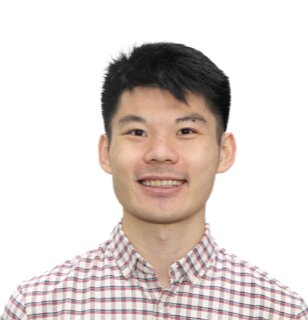 Tandy Lau is an award-winning journalist currently based in Jersey City. He currently works as a staff reporter covering public safety for the New York Amsterdam News in Harlem. He can be contacted at tandylau1995@gmail.com.


1 comment on this item Please log in to comment by clicking here






DaneClaussen
This is a strange article. Documentary has been taught at Berkeley for more than 30 years, as it says, but also at the University of Southern California for 20 or 30 years, and surely other places for a long time. So the article is not a historical retrospective on documentary film in journalism schools. The fact that Maryland finally got around to it is some small piece of news, but small. The article makes no effort to find out how many journalism schools are teaching documentary film nor the various ways it can done (such as a joint program with: a film/video department that is not in the journalism school, an independent film institute in the area, a documentary film production company, etc.). And since many documentaries are partly, mostly or entirely about history, the article should address whether students can or must take a course in historical research methods and/or historiography, and if not, why not.
Saturday, June 20 Report this