
Two hundred and five small local news outlets will receive a share of $20 million from Press Forward. The collective launched a year ago by key journalism funders, including The MacArthur Foundation, The Knight Foundation and others, to address the financial distress of local news nationwide to move some $500 million in grant support to newsrooms.
This was the first open call from Press Forward for grants from their “pooled fund.” Most grantees will receive $100,000 in general operating support over a two-year period. The open call attracted 931 proposals from newsrooms with annual budgets of less than $1 million, underscoring the deep need for financial backing among small, independent outlets.
In an interview with Editor & Publisher, Dale Anglin, director of Press Forward, shared the organization’s excitement about the response and the diversity of the recipient pool. “The recipients are extremely diverse, representing newsrooms dedicated to Black, Indigenous and Latino communities, LGBTQIA people and those living in urban and rural areas.” She said the grantees’ diversity extends beyond geography and includes newly formed digital sites, radio stations, 100-year-old print outlets and college newsrooms.
Anglin noted they got far more applications than expected and had to make difficult choices, as they saw at least 400 newsrooms highly qualified for support. While the team awarded funding to 205 outlets — double the 100 initially planned — the organization remains committed to supporting the broader pool of newsrooms that applied. “We’ve decided to continue working with and engaging that larger group, even though not everyone could get money from Press Forward in this round,” Anglin said.
To do this, Anglin said they are inviting a larger group, including the semi-finalist newsrooms, to remain connected to the organization and benefit from some of the non-cash support the organization will offer, like creating opportunities for the group to share ideas and collaborate together. Press Forward is also adding the extended group to their referral lists for funding local, regional and national foundations.
“Our goal is to elevate and amplify this larger group to funders who should take a deeper look at how they can support journalism and newsrooms that serve communities around the issues they care about — whether that’s climate change or other issues. We want to expand this to help beyond this first round of giving.” Anglin added, “I call journalists ‘frontline workers’ because they are out there connecting with people, knowing the issues they are facing and trying to help provide the important information people need. That’s what these foundations want to do, too.”
A diverse and inclusive group of recipients

The 205 recipients represent a broad spectrum of independent, non-partisan local news organizations representing all 50 states and U.S. territories. They range from emerging nonprofits created during the pandemic to century-old for-profit outlets serving urban and rural communities. These newsrooms produce locally-based stories on topics crucial to residents, including how tax dollars are spent, climate trends, crime and community resources like utility bill assistance.
Forty percent of the grantees are led by Black, Indigenous and other people of color, including Hola Carolina, which provides news for Spanish-speaking communities in Western North Carolina, and Baltimore Beat, a weekly that serves the city’s Black community by focusing on deep community engagement. Additionally, 25% of the grantees serve rural communities, such as the Ouray County Plaindealer in Colorado, a small newsroom serving 5,000 people, and La Prensa Iowa, serving Iowa’s Latino community.
The recipients also include eight student-run college newsrooms, like Triton’s Call at the University of Guam, which does community-centered reporting reflecting the island’s unique narratives and cultures. Anglin said supporting college journalists was especially important in some areas, “There are lots of communities that are under-served or don’t have a lot of coverage. In some cases, the college newsrooms reporting on more than campus issues are filling a big gap.”
Supporting both nonprofit and for-profit newsrooms
Anglin highlighted another essential aspect of the grant program — including for-profit news organizations comprising nearly 60% of the recipients. “I want our funders to understand that you’re probably not going to save this industry by just going through the nonprofit space,” Anglin said. “Many of our foundations aren’t used to working with for-profits, but we want to show there are ways to do this. You can go through your community foundation, join a pooled fund or use a fiscal agency. You have to customize your solution to the problem, and this problem includes a lot of for-profits.”
A nationwide movement for local news
Over the past year, Press Forward has launched 30 local chapters nationwide, where leaders are raising funds and building support for local journalism. Some 60 foundations have signed on to the effort.
Anglin spent months traveling the U.S., meeting with local newsrooms, foundation leaders and community members to learn more about the challenges newsrooms face and how they serve their communities. “When you go on the road and talk to people doing this, you see that small is not small. Small is important. It is the lifeblood of our community, and we’ve got to figure out a way to bring this back and sustain what we have, or else we end up falling into disinformation, misinformation or polarization. People, regular people, know this is important. It's our job to help show them how they can help support their newsrooms.”
Looking ahead, Press Forward will announce its next open call in mid-November. The next round will award another $20 million — this time targeting larger news organizations and news service providers. The focus will be on supporting projects that address larger infrastructure challenges and help outlets scale up or replicate operations across the industry. Full details on the next round of funding will be announced in the coming weeks.
Anglin emphasized that the future of local news is about transformation, not decline. “We hear regularly that local news is dying. It’s not; it’s transforming. And it’s our job to help funders and to let everyone know how they can help support journalism in their communities.”
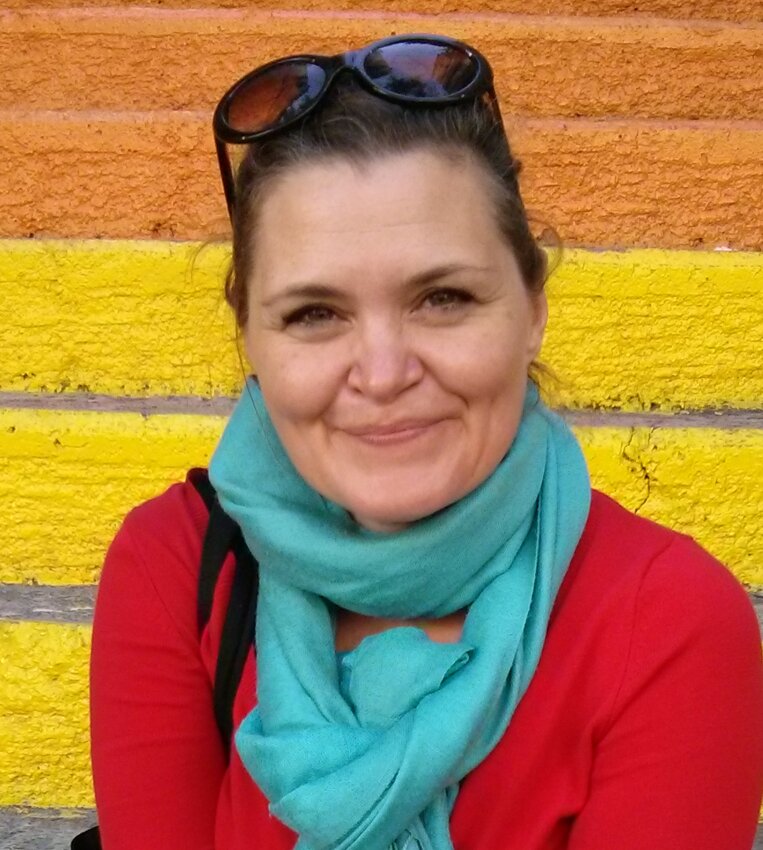 Diane Sylvester is an award-winning 30-year multimedia news veteran. She works as a reporter, editor and newsroom strategist. She can be reached at diane.povcreative@gmail.com.






Comments
No comments on this item Please log in to comment by clicking here